
Description
Potassium acetate is a white, crystalline solid or a clear aqueous solution with excellent solubility and high chemical stability. It is the potassium salt of acetic acid and plays a vital role in deicing, chemical synthesis, and industrial applications.
Thanks to its low environmental impact and biodegradability, potassium acetate serves as a reliable alternative to traditional chloride-based salts. It is especially favored in airport runway deicing and environmentally sensitive areas. In laboratory and pharmaceutical environments, it functions as a buffering agent and catalyst component.
This versatile salt performs effectively under harsh conditions and ensures consistent results across multiple industries.
Chemical Properties
Chemical Name: Potassium Acetate
Synonyms: Acetic acid potassium salt
Molecular Formula: C₂H₃KO₂
Molecular Weight: 98.14 g/mol
CAS Number: 127-08-2
EC Number: 204-822-2
Appearance: White powder or colorless liquid (solution form)
Odor: Odorless or slight vinegar-like
Density (Solid): ~1.57 g/cm³
Density (Liquid): ~1.33 g/cm³ (50% solution)
pH (5% solution): ~9.0
Solubility: Freely soluble in water, alcohol
Melting Point: ~292°C (decomposes)
Applications
Deicing Agent: Used in liquid form for airport runways and roads
Chemical Industry: Intermediate in various synthesis processes
Pharmaceuticals: Buffer and catalyst for certain reactions
Food Industry: Regulator (E261) in specific applications
Laboratory Reagent: Used in protein precipitation and buffer solutions
Industries of Use
Deicing and Winter Maintenance:
Potassium acetate is an effective, chloride-free deicer. It protects concrete and metal surfaces while minimizing environmental damage. Airports often prefer it due to its compatibility with aviation standards.
Chemical and Pharmaceutical Production:
This salt functions as a stabilizer, pH regulator, and buffer. It supports multiple formulations and plays a role in controlled synthesis processes.
Food and Beverage Industry:
Potassium acetate is an approved food additive (E261) and serves as a preservative or acidity regulator in limited food applications.
Laboratories and Diagnostics:
It participates in DNA and RNA extraction protocols and acts as a buffering component in enzymatic reactions.
Storage Conditions
Store the product in tightly sealed containers.
Keep in a cool, dry, well-ventilated area.
Protect from moisture and strong acids.
Follow standard chemical storage guidelines.
Packaging
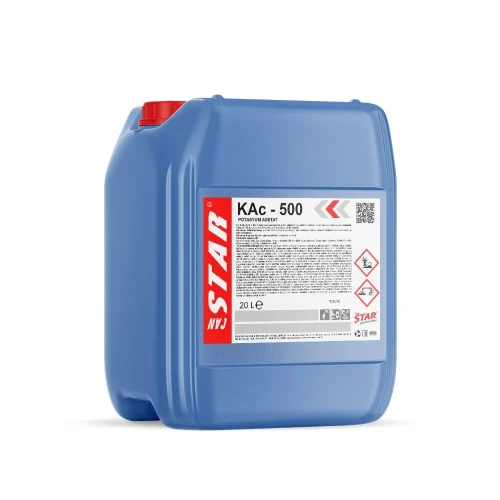
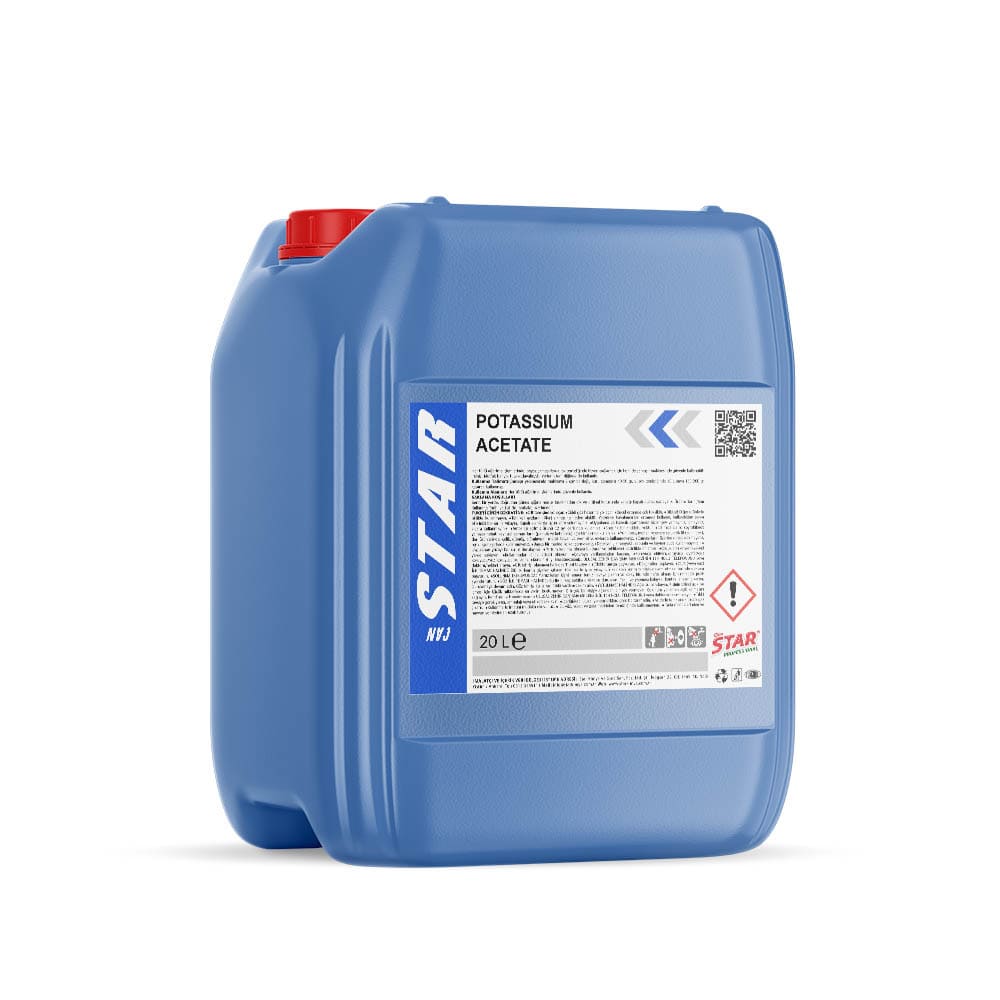
20 L HDPE drum (liquid form)
200 L HDPE barrel (liquid form)
Labelled according to GHS/CLP with UN-compliant packaging.
Safety & Handling
Avoid prolonged skin or eye contact.
Use gloves, goggles, and appropriate protective clothing.
In case of contact, rinse thoroughly with water.
Dispose of waste in accordance with local regulations.