CIP (Clean-In-Place) systems are the backbone of hygienic production in food, beverage, dairy, brewery, pharma, and cosmetics facilities. They clean the inside of tanks, pipelines, valves, heat exchangers, and fillers without disassembly, which saves time and improves consistency. However, even the best CIP skid fails if the chemistry is wrong.
This guide explains how to choose the right CIP cleaning chemicals by category—alkaline cleaners, acid cleaners, and sanitizers—and how private label and contract manufacturing can help brands supply CIP products to global markets.
What Is a Typical CIP Cycle?
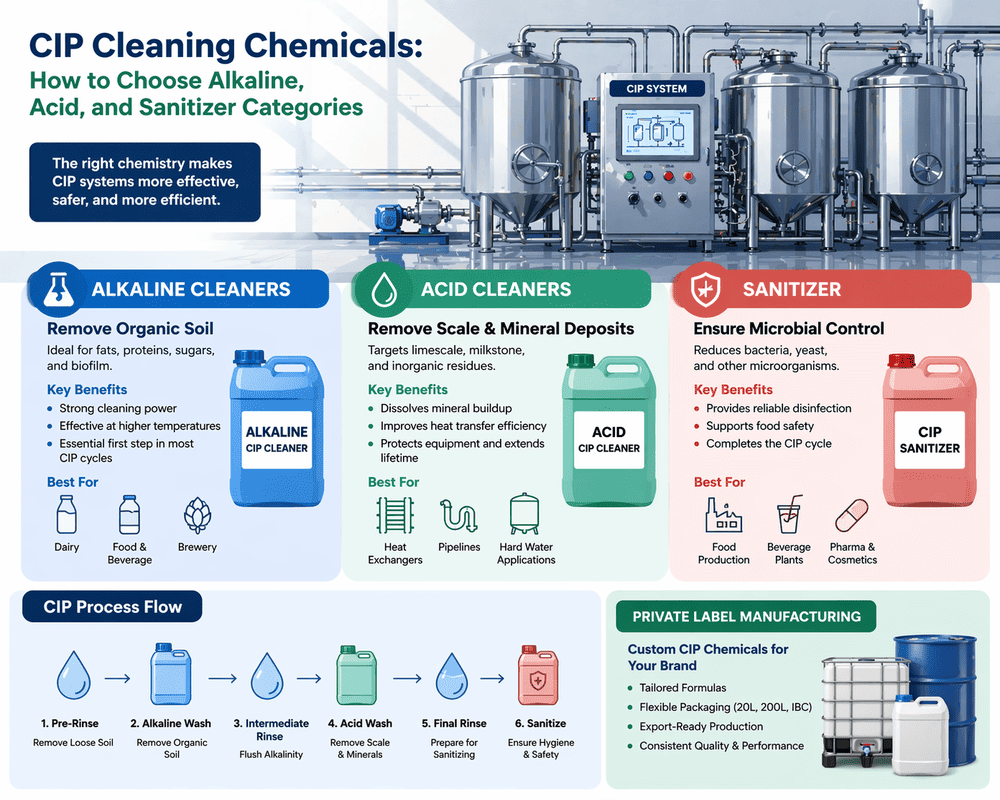
Most CIP programs follow a repeatable sequence:
- Pre-rinse (remove loose soils)
- Alkaline wash (remove organic soils: fats, proteins, sugars)
- Intermediate rinse (flush alkalinity)
- Acid wash (remove mineral scale and inorganic deposits)
- Final rinse (restore neutral condition)
- Sanitizing / disinfection (reduce microbial load before production)
Not every plant uses every step, but the alkaline + acid + sanitizer combination is the standard framework for industrial hygiene.
Category 1: Alkaline CIP Cleaners (Removing Fats, Proteins, and Organic Soil)
What alkaline cleaners do best
Alkaline CIP detergents target organic contamination:
- fats and oils
- proteins (milk, whey, meat residues)
- carbohydrates and syrups
- biofilm build-up (when supported with proper conditions)
Common alkaline cleaner types
a) Caustic-based alkaline cleaners
Used for heavy soil loads and high-throughput plants.
b) Non-caustic / moderate alkaline cleaners
Used when equipment sensitivity or safety requirements limit caustic strength.
Key selection factors
- Soil type and load: dairy proteins and fats require stronger alkalinity than light beverage lines.
- Temperature: alkaline cleaning improves strongly with heat.
- Water hardness: hard water can reduce performance and cause film.
- Foam control: CIP systems need low-foam chemistry to maintain pump stability.
- Material compatibility: stainless steel is robust, but seals, gaskets, and some plastics need careful selection.
When you should choose alkaline first
- You see greasy film, protein haze, or sticky organic buildup
- You handle dairy, sauces, oils, or fermentation residues
- You need strong daily cleaning before an acid step
Category 2: Acid CIP Cleaners (Removing Scale, Mineral Deposits, and Inorganic Film)
What acid cleaners do best
Acid CIP detergents remove inorganic contamination, including:
- limescale / calcium carbonate
- milkstone (calcium phosphate/protein complexes)
- iron deposits and rust staining
- beer stone and mineral film on heat exchangers
Acid steps also help restore surface condition after caustic use and keep stainless steel hygienic by removing mineral layers where microbes can anchor.
Common acid cleaner types
a) Descalers for hard water scale
Designed to dissolve carbonate deposits efficiently.
b) Acid cleaners for milkstone and mixed soils
Often used in dairy and beverage environments.
c) Acid cleaners with corrosion inhibitors
Used where protection of sensitive alloys or components is needed.
Key selection factors
- Deposit type: milkstone behaves differently from simple limescale.
- Concentration and contact time: stronger isn’t always better—control matters.
- Temperature: many acid steps work efficiently at moderate temperatures.
- Inhibitors: important if corrosion risk exists due to mixed metals.
When you should choose an acid step
- Heat exchangers lose efficiency due to scale
- You see white mineral film or “stone” in lines
- You operate in hard-water regions
- You want longer equipment life and stable process efficiency
Category 3: CIP Sanitizers (Disinfection and Microbial Control)
What sanitizers do best
Sanitizers reduce microbial load after cleaning. They are not a replacement for cleaning—sanitizing on top of soil does not work reliably. A proper sanitizer step is applied after rinsing and surface preparation.
Sanitizer categories (high-level)
a) Oxidizing sanitizers
Strong antimicrobial action and often preferred for rapid sanitation.
b) Non-oxidizing sanitizers
Used when compatibility or specific microbial control strategy requires them.
Key selection factors
- Target microbes and risk profile: yeast/mold vs. bacteria vs. biofilm conditions.
- No-rinse vs rinse-required approach: depends on process and compliance.
- Material compatibility: protect seals, elastomers, and sensitive metals.
- Residue management: avoid unwanted taste/odor transfer in food/beverage.
When you should prioritize sanitizer selection
- You need consistent microbial control before production
- You run high-risk production (dairy, ready-to-drink, pharma)
- You manage frequent changeovers and want reliable sanitation
How to Choose the Right CIP Chemical Set (Decision Framework)
Step 1: Identify the dominant soil
- Organic soil → start with alkaline
- Inorganic scale → ensure an acid step
- Microbial control → finalize with the right sanitizer
Step 2: Confirm your process conditions
- Temperature range
- Water hardness
- Cycle time
- Equipment materials
- Foam sensitivity of pumps and returns
Step 3: Optimize concentration, not just chemical strength
Over-dosing increases cost and may create residue or corrosion risk. Under-dosing leads to failures and biofilm.
Step 4: Validate performance with measurable outcomes
- visual inspection and swab tests
- conductivity and pH monitoring
- ATP tests (where applicable)
- microbiological results per plant standard
Common CIP Mistakes to Avoid
- Using sanitizer as a “cleaner” (it won’t remove fats/proteins)
- Skipping acid steps in hard-water plants (scale builds fast)
- Choosing foaming chemistry that destabilizes CIP circulation
- Overusing aggressive chemistry that damages seals or causes corrosion
- Ignoring rinse quality (carryover kills performance)
Private Label CIP Cleaning Chemicals: A Growing B2B Opportunity
Industrial hygiene buyers increasingly source private label CIP chemicals for:
- dairies and beverage plants
- food processors and breweries
- contract packers
- hygiene distributors and facility service companies
Private label production allows your brand to offer:
- alkaline CIP detergents
- acid CIP descalers
- sanitizing solutions
- industry-specific variants (dairy, brewery, pharma)
With private label manufacturing, you can customize:
- performance profile (soil type, water hardness)
- concentration level (standard vs high-concentrate)
- packaging formats (20 L, 200 L, IBC)
- labeling language and documentation
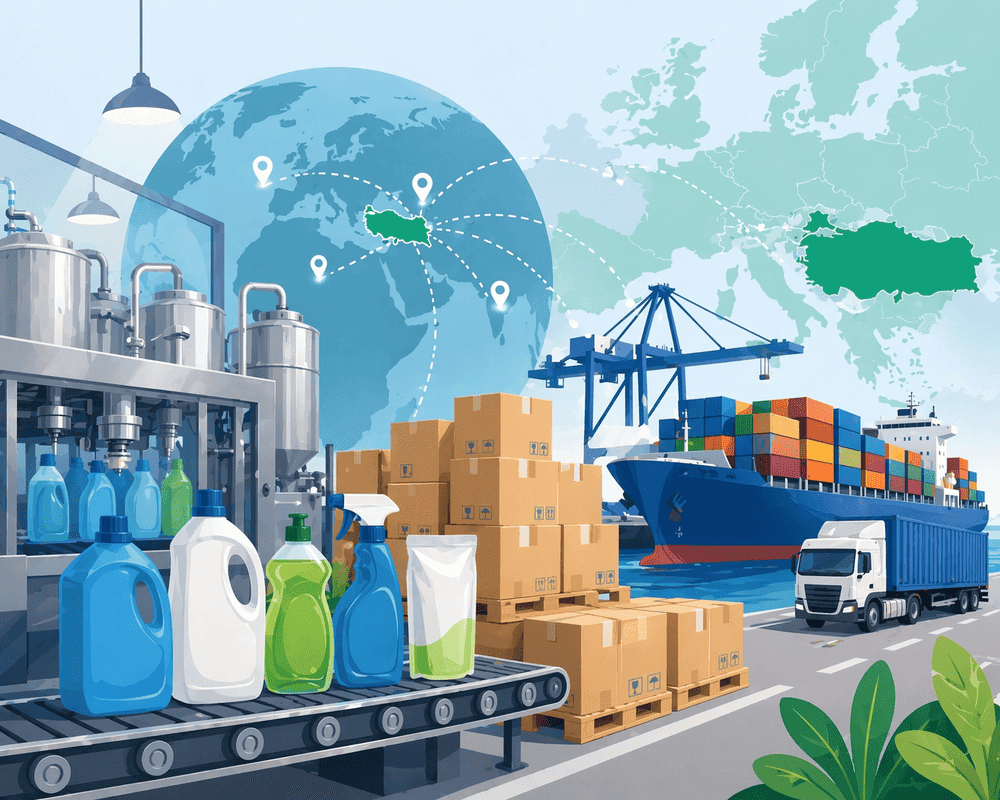
If you are looking for a reliable partner for private label CIP cleaning chemicals and contract manufacturing industrial hygiene products, Turkey offers a competitive advantage through scalable chemical production and export-ready logistics. Star Kimya, as a custom cleaning chemical manufacturer in Turkey, supports B2B buyers with private label alkaline cleaners, acid descalers, and sanitizer categories designed for CIP systems. With flexible packaging options and consistent production capability, Star Kimya helps distributors and brands supply CIP cleaning solutions to international markets efficiently.
https://www.starkimya.com/en/categories/food-and-dairy-industry-hygiene/