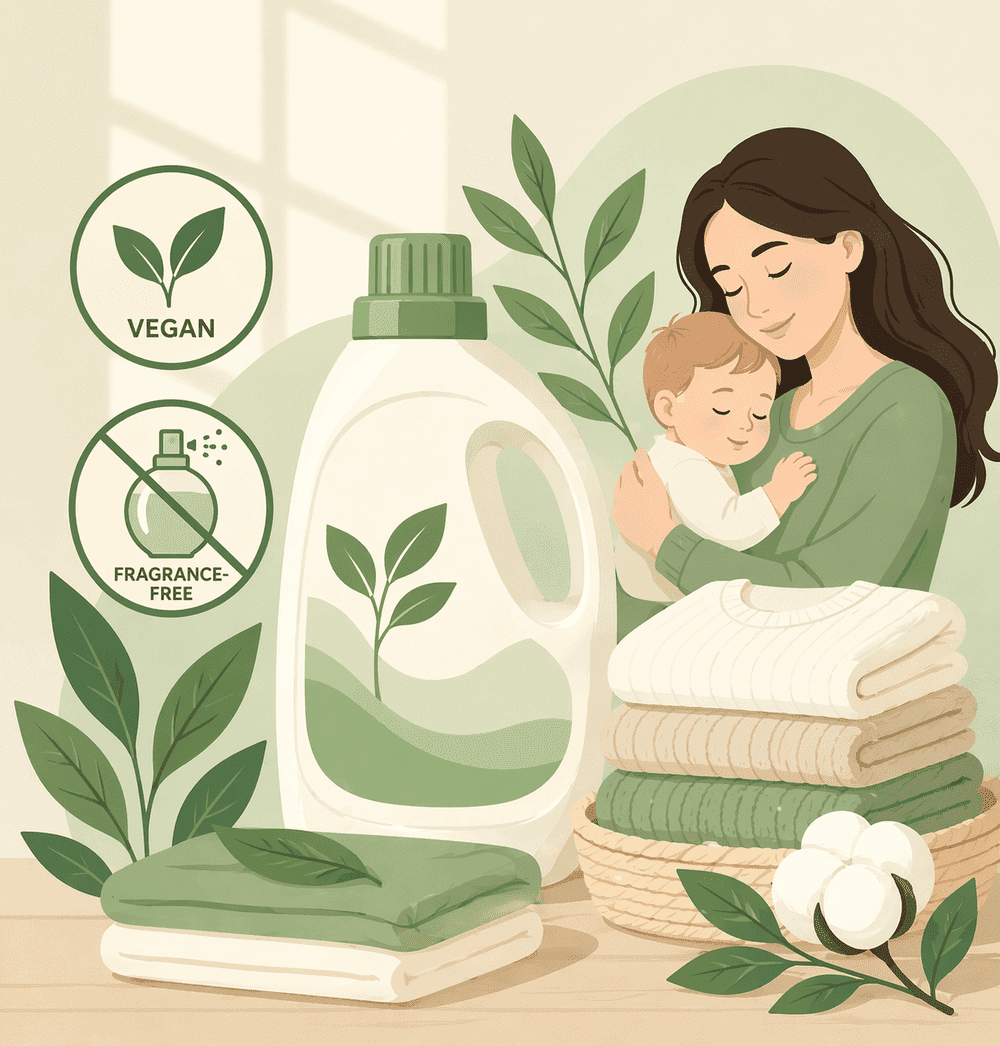
Sensitive skin is no longer a niche segment in the detergent market. In 2026, it is one of the strongest growth drivers for laundry and home-care brands. Consumers now read labels more carefully, avoid strong scents, and actively search for vegan and fragrance-free detergents that clean well without triggering irritation.
So what exactly do sensitive-skin consumers want in 2026? The answer is a mix of ingredient simplicity, low-residue performance, transparent claims, and sustainability—all delivered with real cleaning power.
Why Sensitive-Skin Demand Is Rising
Several global shifts are pushing this category forward:
- More households report skin sensitivity, eczema, or fragrance intolerance
- Parents want safer products for babies and children
- Consumers associate “clean” with low chemical exposure
- Online reviews quickly punish products that cause irritation or leave residue
- Sustainability expectations favor plant-based and refill-friendly detergents
As a result, “gentle” is no longer a soft claim. It’s a performance requirement.
What “Vegan” and “Fragrance-Free” Really Mean
Vegan detergent
A vegan detergent contains no animal-derived ingredients. It typically uses plant-based or mineral-origin raw materials. Vegan products also often align with cruelty-free positioning, although brands should confirm testing policies and certifications.
Fragrance-free detergent
A fragrance-free detergent contains no added perfume. This matters because fragrance blends are among the most common triggers for:
- itching
- redness
- dry, irritated skin
- headaches and respiratory discomfort
Important detail: “unscented” can sometimes still include masking agents. Sensitive consumers increasingly look for truly fragrance-free labels.
What Sensitive-Skin Consumers Want Most in 2026
1) Low-residue formulas that rinse clean
Sensitive-skin buyers care less about “strong smell” and more about whether clothes feel clean without residue. Residue is a major cause of irritation, especially on:
- underwear
- towels
- baby clothes
- sportswear
In 2026, successful brands design detergents to rinse clean in both soft and hard water.
2) No dyes, no optical brighteners
Dyes add marketing color but not cleaning performance. Optical brighteners make whites appear brighter under light, but they can increase formula complexity. Sensitive consumers prefer dye-free and often avoid brighteners.
3) Mild, plant-based surfactants
Sensitive users want cleaning agents that remove soils while remaining gentle.
Common “sensitive-friendly” surfactant strategies include:
- plant-based or mild surfactant systems
- balanced low-irritation surfactant ratios
- reduced harsh anionic load when possible
Consumers may not recognize every surfactant name, but they respond strongly to “plant-based cleaning agents” and “gentle on skin” messaging—if performance matches.
4) Clear ingredient transparency
In 2026, many buyers choose brands that provide:
- simple ingredient communication
- “free-from” statements (no fragrance, no dye, etc.)
- honest performance descriptions
They want clarity, not vague marketing.
5) Dermatologically tested positioning
Sensitive-skin consumers trust third-party validation. If a product is tested, the brand should communicate it carefully and accurately. Claims must remain compliant with the target market regulations.
6) Performance at low temperatures
Cold-wash adoption continues to rise due to energy costs and sustainability awareness. Sensitive-skin consumers often wash baby clothes frequently and prefer:
- effective cleaning at 20–30°C
- low residue
- fabric-safe results
This increases demand for well-designed enzyme systems or optimized surfactant structures—without adding irritants.
7) Sustainable packaging: concentrated and refill formats
Sensitive-skin consumers overlap strongly with eco-conscious consumers. In 2026, they prefer:
- concentrated detergents
- refill pouches
- powder refills or sachets
- reduced plastic packaging
The “gentle + sustainable” combination is one of the strongest category positioning strategies.
Ingredient Trends: What Brands Use in 2026 (High-Level)
A modern vegan fragrance-free detergent for sensitive skin is often built with:
- Plant-based surfactants for soil removal
- Mineral-based builders to support cleaning and water hardness
- Readily degradable chelating agents to reduce residue and improve rinse
- Carefully selected preservatives (especially for liquids)
- Optional: enzyme systems for stain removal and cold-wash performance
Brands avoid harsh fragrance systems, heavy dyes, and sticky additives that increase residue.
Common Mistakes Brands Must Avoid
Sensitive consumers quickly leave negative reviews when they experience:
- “Fragrance-free” that still smells strongly
- Overly thick formulas that don’t rinse clean
- High-foam products that leave film
- Confusing claims without ingredient clarity
- Harsh degreasing that damages fabric softness
The best products feel clean, rinse clean, and stay simple.
What to Offer: Product Line Structure That Works
A strong 2026 lineup for sensitive-skin buyers often includes:
- Fragrance-free + dye-free everyday detergent
- Sensitive baby detergent (extra gentle positioning)
- Concentrated or refill version (eco and cost advantage)
- Optional: enzyme-free variant for extremely sensitive users
This gives consumers choice without overwhelming them.
Private Label Opportunities: Building Sensitive-Skin Detergents in 2026
For brands entering this category, private label manufacturing provides speed and flexibility. You can develop:
- vegan fragrance-free liquid detergents
- powder detergents for sensitive skin
- concentrated versions for higher margins
- refill pouches or sachets for sustainability positioning
With private label production, brands can control:
- formula profile
- packaging format
- market claims
- pricing and positioning
If you are building a 2026-ready range of vegan fragrance-free detergents for sensitive-skin consumers, private label manufacturing in Turkey can offer a strong competitive edge. Turkey provides scalable detergent production, flexible packaging options, and export-friendly logistics for international brands. Star Kimya, as a custom cleaning product manufacturer in Turkey, supports private label hygiene products and contract manufacturing detergents, including fragrance-free and dye-free laundry detergents developed for sensitive households. This allows brands to launch faster, manage costs, and deliver the “gentle + effective + sustainable” products that the market demands in 2026.