
Description
Sodium acetate solution is the aqueous form of the sodium salt of acetic acid. This versatile liquid compound is widely used in water treatment, chemical manufacturing, and the food industry. Known for its excellent buffering properties, it is particularly effective in regulating pH and maintaining chemical stability across a wide range of applications. The solution is clear to slightly yellow in appearance and emits a mild vinegar-like odor due to residual acetic acid.
In the field of water and wastewater treatment, sodium acetate serves as a highly biodegradable carbon source, supporting the denitrification process in biological nutrient removal (BNR) systems. In the textile and leather industries, it ensures optimal dye uptake and tanning performance by acting as a mordant and pH stabilizer. It is also approved as a food additive (E262), used to enhance flavor and extend shelf life in processed products. Additionally, it finds utility in construction chemicals for corrosion control and in reusable heat packs through exothermic crystallization.
Chemical Properties
Chemical Name: Sodium Acetate
Synonyms: Sodium ethanoate, Acetic acid sodium salt, CH₃COONa
Molecular Formula: CH₃COONa
Molecular Weight: 82.03 g/mol
CAS Number: 127-09-3
EC Number: 204-823-8
Appearance: Clear to slightly yellow liquid
Odor: Mild acetic acid-like odor
Solubility: Fully miscible in water and alcohol
Density: ~1.20 g/cm³ (varies with concentration)
pH (1% solution): 8.5–9.5
Concentration Range: Available from 25% to 50% (customizable)
Applications
Sodium acetate solution is utilized in a wide variety of technical and industrial applications:
As a biodegradable carbon source in municipal and industrial wastewater treatment plants.
In textile dyeing as a mordant and buffering agent for acid dyes.
For pH control and preservation in food processing (E262).
In leather tanning baths for stabilizing collagen and regulating pH.
As a corrosion inhibitor and accelerator in concrete admixtures.
As a chemical intermediate or reagent in various synthetic processes.
In heat pack manufacturing, leveraging its crystallization heat release.
Industries of Use
Sodium acetate solution is a key raw material across multiple industries:
Water & Wastewater Treatment:
Used extensively in denitrification and nutrient removal due to its high biodegradability and efficiency as a carbon donor.
Textile & Dyeing Industry:
Acts as a mordant and dye bath buffer to ensure uniform color fixation on natural and synthetic fibers.
Food & Beverage Processing:
Approved as food additive E262 for flavor enhancement and preservation. Effective in sauces, dressings, and processed snacks.
Leather Industry:
Enhances the tanning process by stabilizing the acidic environment required for proper collagen treatment.
Construction Chemicals:
Applied in concrete to prevent corrosion of reinforcing steel and accelerate curing in cold climates.
Chemical Manufacturing & Research:
Serves as a buffering agent and reactant in the production of esters, pharmaceuticals, and other organic compounds.
Thermal Products:
Used in reusable heat packs based on the latent heat of crystallization principle.
Storage Conditions
Store in tightly closed HDPE or stainless steel containers.
Ideal storage temperature: 5–30°C.
Keep in a dry, cool, and well-ventilated area away from strong acids and oxidizers.
Avoid prolonged exposure to sunlight and air.
Shelf life: 12 months from date of manufacture when stored properly.
Packaging
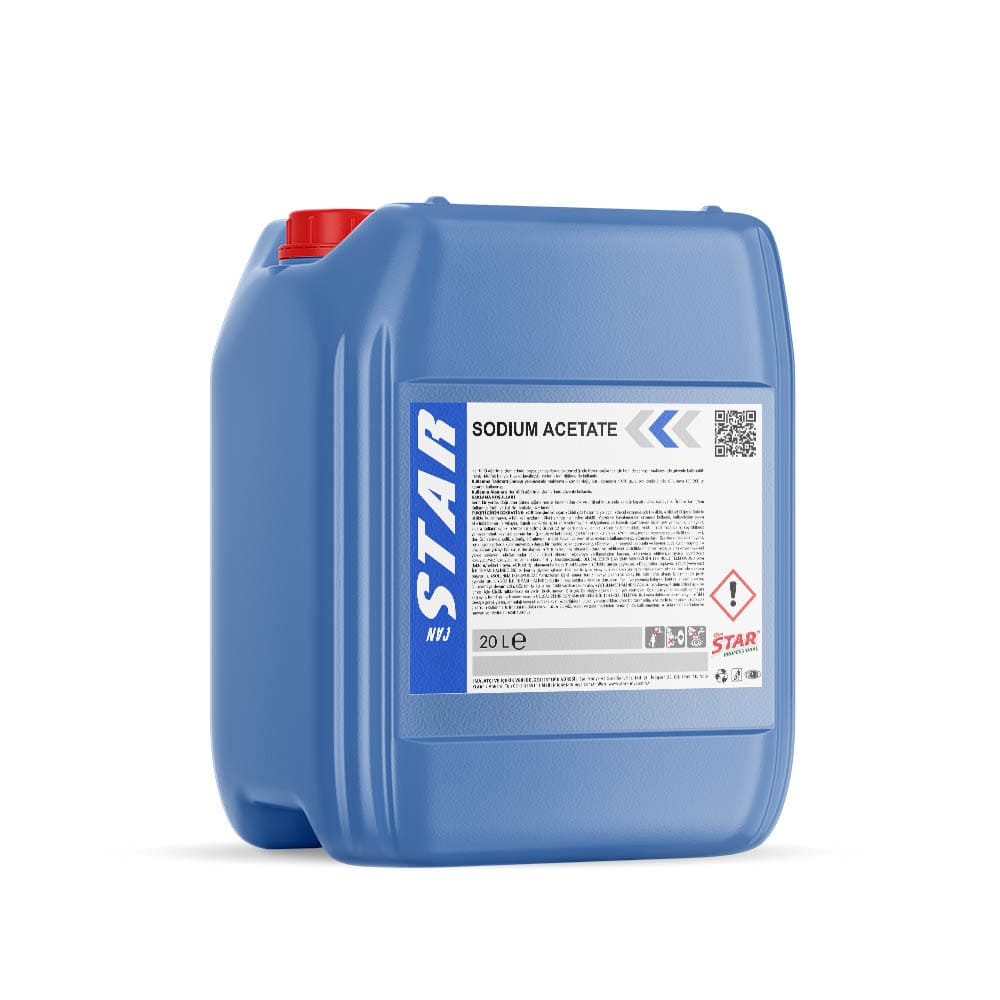
20 L HDPE drums
220 L plastic barrels
Bulk deliveries via ISO tank available upon request
All packaging is UN-certified and compliant with global transport and chemical safety regulations. Labels include hazard classification, batch number, and traceability data.
Safety & Handling
Not classified as hazardous under GHS for standard concentrations.
Wear appropriate protective gloves, goggles, and clothing when handling.
Avoid inhalation of vapors and direct contact with skin and eyes.
In case of skin or eye contact, rinse thoroughly with water. Seek medical attention if irritation persists.
Ensure good ventilation in work areas.