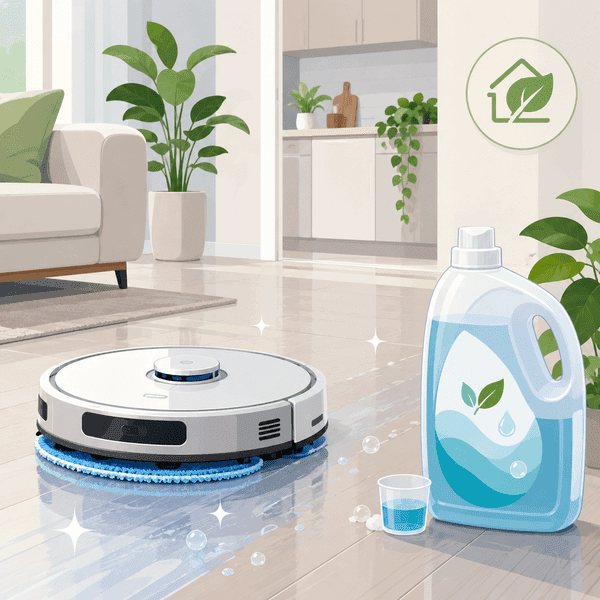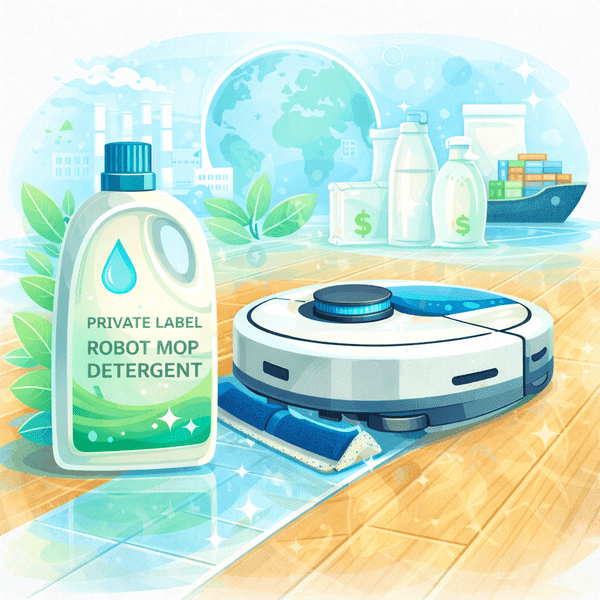
Robot vacuum cleaners with mopping functions have moved from “nice-to-have” gadgets to everyday home appliances. As a result, demand is rising for robot vacuum cleaner detergents that clean effectively while protecting tanks, pumps, sensors, seals, and sensitive floor finishes. In 2026, brands that win this category focus on three priorities: low-foam performance, residue-free drying, and material compatibility.
This guide explains what manufacturers look for in a modern robot mop detergent, which formula types are trending, what to avoid, and how private label production typically works.
Why Robot Mop Detergents Are a Fast-Growing Category in 2026
Consumers want convenience and consistent results. However, mopping robots create unique constraints that standard floor cleaners often fail to meet:
Small tanks and precise dosing increase the risk of overuse
Pumps and channels can clog if the formula leaves residue
Foaming can trigger error codes, reduce suction, and create streaking
Some fragrances, dyes, or oils can build up on sensors and plastics
Floor compatibility matters (laminate, vinyl, sealed hardwood, stone)
That is why brands increasingly source from robot vacuum cleaner detergent manufacturers that understand low-foam chemistry and appliance-safe formulation.
What a “Robot-Safe” Mopping Detergent Must Do
A high-performing robot mop detergent should deliver these technical outcomes:
Low foam, stable in circulation
Robots recirculate and agitate solution. A robot detergent must stay low-foam across different water hardness levels.
No residue, no streaks
The formula should rinse clean and dry quickly. Residue causes sticky floors, hazing, and repeated re-soiling.
Compatibility with plastics and elastomers
Detergents must work safely with common materials like PP, PE, PET, ABS, and elastomers used for seals and valves. Compatibility reduces swelling, cracking, and leaks.
Gentle on common floor finishes
The product should clean without damaging coated or sealed surfaces. It should avoid aggressive solvent load that can dull finishes over time.
Formula Types That Private Label Brands Launch in 2026
Robot mop detergents usually fall into a few winning product formats:
1) Ultra low-foam concentrated liquid
Small dose per tank
Strong cost-per-use advantage
Best for premium positioning
2) Refill concentrates and sachet systems
Lower shipping cost and plastic use
Easy for e-commerce and subscription models
Strong sustainability story
3) “Sensitive home” variants
Fragrance-free, dye-free options
Better suited for baby households and allergy-sensitive users
Cleaner label positioning
Ingredient Strategy: What Manufacturers Use (at a High Level)
Robot vacuum cleaner detergent manufacturers usually build formulas around:
Low-foam nonionic surfactants for grease and daily soil removal
Mild hydrotropes / solubilizers to keep the formula clear and stable
Water conditioners / chelating agents to reduce streaking in hard water
pH control for surface safety and consistent cleaning
Optional mild preservatives for product stability (especially in water-rich formulas)
This approach supports consistent cleaning while minimizing foam, residue, and component stress.
What to Avoid in Robot Mop Detergent Formulas
Many consumer complaints come from the wrong ingredients. A 2026-ready robot mop detergent typically avoids:
High-foaming surfactants that trigger foam issues and errors
Heavy oils or waxy additives that coat channels and sensors
Excessive dyes that stain tanks or leave traces
Overly strong solvents that can attack plastics and floor coatings
Sticky polymers that can build up inside narrow lines and nozzles
Strong fragrances that can contribute to residue and sensitivity complaints
In short, robot detergents should clean quietly—without leaving anything behind.
Performance and Compatibility Testing Brands Should Request
If you work with a contract manufacturer, ask for testing aligned with real use conditions:
Foam test across water hardness levels
Residue and streaking evaluation on tile, laminate, and vinyl
Material compatibility checks with common plastics and elastomers
Stability testing (clarity, odor, viscosity, separation)
User-dosing tolerance (what happens if users overdose)
These checks reduce returns and protect brand reputation.
Packaging Options That Fit the Robot Detergent Market
Private label manufacturers often offer multiple packaging routes:
Small premium bottles (ideal for e-commerce bundles)
1 L and 2 L family formats (value positioning)
Concentrate refill bottles (lower plastic per use)
Sachets / refill pouches (shipping-efficient, sustainability messaging)
For 2026, refill-friendly packaging is a major conversion driver, especially in EU markets.
Private Label Process: How Brands Typically Launch
A typical private label timeline includes:
Define target: floors, fragrance level, concentrate ratio, markets
Select base formula or develop a custom variant
Run foam/residue/material compatibility validation
Finalize packaging and label claims (low-foam, residue-free, etc.)
Prepare export documentation as needed
Pilot batch, then scale production
A capable manufacturer helps streamline this flow so you can reach market faster.
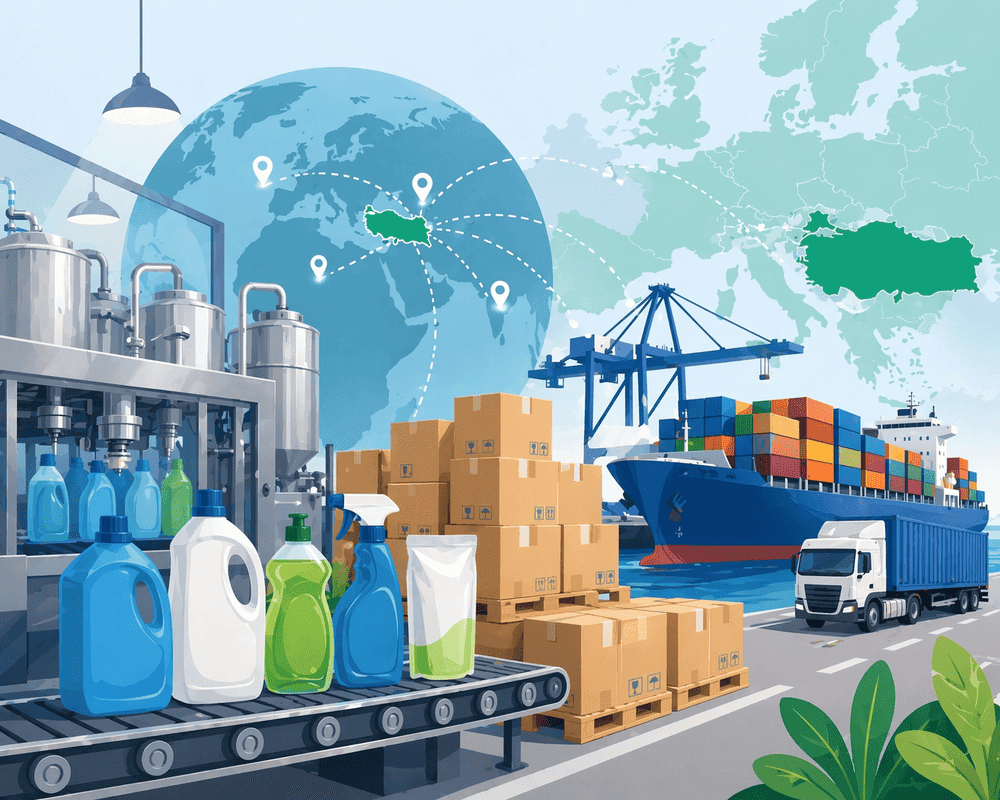
If you are searching for robot vacuum cleaner detergent manufacturers that can support private label mopping robot detergents at scale, Turkey offers a strong combination of production capability, speed, and cost-efficiency for global brands. With flexible manufacturing infrastructure and export-ready supply chains, Turkey is an increasingly preferred hub for private label detergent manufacturing and contract manufacturing detergents for Europe, the Middle East, and beyond. Star Kimya, a custom cleaning product manufacturer in Turkey, supports private label projects for low-foam robot mop detergents, refill-ready formats, and performance-driven formulas designed for appliance safety and residue-free cleaning. This gives brands a practical advantage in 2026: faster launches, competitive pricing, and a partner that understands modern cleaning product requirements.
Robot Vacuum Cleaner Detergent – Low-Foaming, Residue-Free Floor Cleaning Solution