Robot vacuum cleaners with mopping functions have become an essential part of modern homes, offices, and smart living spaces. However, one critical detail is often overlooked: the detergent used in the water tank. Using the wrong cleaner can significantly reduce cleaning performance and, more importantly, damage the robot vacuum itself.
This article explains which detergents are best for robot mops, why regular floor cleaners should be avoided, and how low-foaming formulas outperform standard cleaners in robotic systems.
Why Regular Floor Cleaners Damage Robot Vacuums
Most conventional floor cleaners are designed for manual mopping, not for automated cleaning systems. When used in robot vacuums, they create several hidden problems.
Excessive Foam Formation
Regular floor cleaners often contain high-foaming surfactants. Inside a robot vacuum, foam can:
Trigger sensor errors
Disrupt water flow
Enter internal components not designed for air bubbles
Robotic systems rely on precise liquid control. Foam interferes with pumps, valves, and flow meters, reducing reliability over time.
Residue and Sticky Film
Many household cleaners leave behind:
Gloss enhancers
Polymers
Soap residues
While this may seem beneficial at first, residue builds up inside water tanks, hoses, and spray nozzles, leading to:
Streaky floors
Sticky surfaces that attract dirt faster
Blocked spray outlets
Clogged Nozzles and Pump Damage
Standard detergents are not optimized for:
Micro-nozzles
Low-volume pumps
Continuous automated circulation
Over time, residue accumulation causes clogging, uneven water distribution, and increased mechanical stress on the pump system.
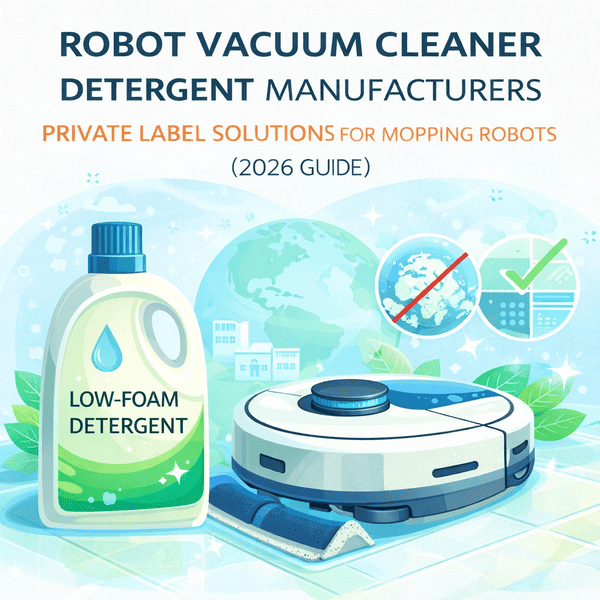
Low-Foaming Detergent vs. Standard Floor Cleaner
Why Low-Foaming Formulas Work Better in Robot Mops
Low-foaming detergents are specifically engineered for automated cleaning systems. Their advantages include:
Stable liquid flow without air entrapment
Consistent spray patterns
No interference with sensors
Faster, streak-free drying
In robot vacuums, foam control is more important than foam strength. Cleaning efficiency comes from surface chemistry, not bubbles.
Residue-Free Performance
A proper robot vacuum detergent is designed to:
Rinse clean without stickiness
Leave no visible film
Prevent internal buildup
This ensures both cleaner floors and longer device lifespan.
Device Compatibility
Low-foaming robot detergents are formulated to be:
Neutral to mildly alkaline
Safe for plastic, silicone seals, and micro-pumps
Compatible with leading robot vacuum brands
This makes them suitable for daily or frequent use, unlike standard cleaners that are too aggressive or unstable for robotic systems.
What to Use and What to Avoid in Robot Vacuum Detergents
Use Detergents That Are:
Low-foaming or foam-controlled
Residue-free after drying
Neutral or mildly alkaline (pH 7–8)
Designed for automated or robotic cleaning systems
Avoid Products That Contain:
High-foaming surfactants
Thickening agents or polymers
Wax, shine boosters, or soap flakes
Bleach, acids, or aggressive solvents
Using the wrong detergent may not cause immediate failure, but long-term damage is almost guaranteed.
Why Dedicated Robot Vacuum Detergents Are the Best Choice
Detergents formulated specifically for robot vacuums:
Clean effectively with minimal chemical load
Protect internal components
Maintain consistent performance over time
Reduce maintenance and warranty risks
For both end users and professional cleaning environments, choosing the right detergent directly impacts operating cost and device longevity.
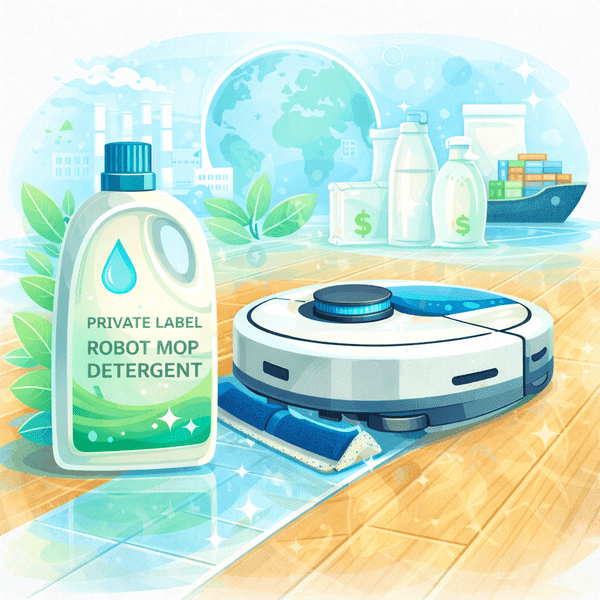
Private Label & Manufacturing Opportunities
Dedicated robot vacuum detergents are a rapidly growing niche category, creating strong opportunities for private label and white label manufacturing. These products are ideal for:
E-commerce brands
Smart home product distributors
Cleaning product wholesalers
Retail chains and marketplace sellers
Manufacturing in Turkey offers key advantages, including strategic access to Europe, the Middle East, and North Africa, competitive production costs, fast lead times, and compliance with EU REACH and CLP regulations. Flexible OEM / ODM production, custom formulations, branded packaging, and export-ready documentation (TDS, SDS, COA) make Turkey an efficient and scalable sourcing hub for robot vacuum cleaning solutions.
As demand for robotic cleaning continues to grow globally, private label robot vacuum detergents represent a high-margin, export-friendly product category with strong long-term potential.
Robot Vacuum Cleaner Detergent – Low-Foaming, Residue-Free Floor Cleaning Solution