If you have sensitive skin—or you’re shopping for a baby, a child, or anyone prone to irritation—you’ve probably asked this question: Is vegan detergent better for sensitive skin? The honest answer is: it can be, but “vegan” alone doesn’t guarantee a gentler formula. Skin comfort depends on the specific surfactants, fragrances, dyes, preservatives, and dosing used in the product.
This guide explains what actually triggers irritation, how vegan detergents compare to conventional options, and how to choose a detergent that’s truly safer for sensitive skin.
What Sensitive Skin Reacts To in Laundry Detergent
Most irritation happens due to residue left in fabric—especially on towels, underwear, baby clothes, or athletic wear. The most common triggers include:
1) Fragrance and perfume allergens
Fragrances are one of the top reasons people experience:
itching
redness
rashes
headaches or respiratory discomfort
Even “fresh scent” products can contain complex fragrance blends.
2) Dyes and colorants
Dyes do not improve cleaning performance. They increase the chance of reactions in highly sensitive users.
3) Harsh surfactants at high dose
Some surfactants clean well but can cause dryness or irritation if:
the formula is aggressive, or
the detergent is overdosed, or
rinsing is insufficient
4) Preservatives and sensitizers
Some preservative systems are more likely to trigger contact dermatitis in sensitive individuals.
5) Fabric softeners and scent boosters (often the real problem)
Many “laundry routines” include additional products that leave residue, including softeners and perfume beads. These frequently cause more irritation than detergent itself.
Does “Vegan” Automatically Mean “Gentle”?
Not automatically.
Vegan means the product contains no animal-derived ingredients. That is an ethical and ingredient-source definition—not a skin safety definition.
However, vegan detergents often overlap with “gentler” positioning because many vegan brands also:
reduce fragrance
avoid dyes
use plant-based surfactants
focus on biodegradable ingredients
That combination can make vegan detergents more likely to be suitable for sensitive skin—especially if they are fragrance-free.
Vegan vs Conventional Detergents for Sensitive Skin: What’s the Real Difference?
Vegan detergents may be better when they are:
Fragrance-free (or very low fragrance)
Dye-free
Based on milder surfactants
Designed for low residue and easy rinsing
Conventional detergents may irritate more often when they include:
heavy fragrance systems
strong dyes
very concentrated perfume oils
additional boosters that remain on fabric
But it’s still possible to find gentle conventional detergents—and harsh vegan ones. Always evaluate the formula signals, not the label alone.
What to Look For: Best Vegan Detergent Features for Sensitive Skin
1) “Fragrance-Free” (not just “natural fragrance”)
If allergies or eczema are a concern, fragrance-free is usually the best option. “Natural fragrance” can still contain allergenic components.
2) “Dye-Free”
Simple win. No downside for performance.
3) Mild, plant-based surfactants
Look for ingredients or claims such as:
alkyl polyglucosides (APG) (e.g., decyl glucoside, lauryl glucoside)
mild plant-derived surfactant systems
“dermatologically tested” (when credible)
4) Clear dosing instructions
Under-dosing reduces cleaning. Over-dosing increases residue. Sensitive skin does best with correct dosing.
5) Strong rinsing performance (low residue)
Detergents designed to rinse clean reduce skin contact with residues.
Ingredients to Avoid (Especially for Allergy-Prone Households)
If you’re choosing a detergent for sensitive skin, avoid or minimize:
Perfumes / fragrance blends
Colorants
Scent boosters
Fabric softeners (they coat fibers and trap fragrance)
Very strong disinfectant-style additives unless truly needed
For households with severe eczema or dermatitis, the simplest formula often performs best.
Are Enzymes Safe for Sensitive Skin?
Enzymes are excellent for stain removal, especially at lower temperatures. Most people tolerate enzyme detergents well. However, in rare cases, extremely sensitive users may prefer an enzyme-free formula.
A practical approach:
If you have heavy stains: try enzyme-based detergent first
If irritation persists: switch to fragrance-free + dye-free + enzyme-free and compare results
Practical Safety Tips That Make a Huge Difference
1) Run an extra rinse
An extra rinse can significantly reduce residue on clothing—especially for baby items and towels.
2) Use the correct dose (usually less than people think)
Overuse is a common cause of irritation. More detergent does not mean cleaner clothes.
3) Skip fabric softener
If your household deals with itching or rashes, remove softener first. Many people see improvement immediately.
4) Wash new clothes before wearing
New textiles can carry finishing agents and dyes that irritate skin.
5) Choose lower temperatures when possible
Hot water can sometimes set certain residues or damage delicate skin barriers through fabric roughness. Use the temperature recommended for the fabric and soil.
Best Use Cases for Vegan Detergent in Sensitive-Skin Homes
Vegan, fragrance-free detergent is especially helpful for:
baby clothes and bedding
eczema-prone individuals
sensitive skin during winter (dryness season)
households avoiding strong chemical scents
people seeking biodegradable and gentle formulas
Conclusion
Is vegan detergent better for sensitive skin? It often is—when it’s fragrance-free, dye-free, and formulated to rinse clean. The “vegan” claim alone isn’t enough, but it can be a strong sign when paired with the right formulation choices.
If you want the safest starting point:
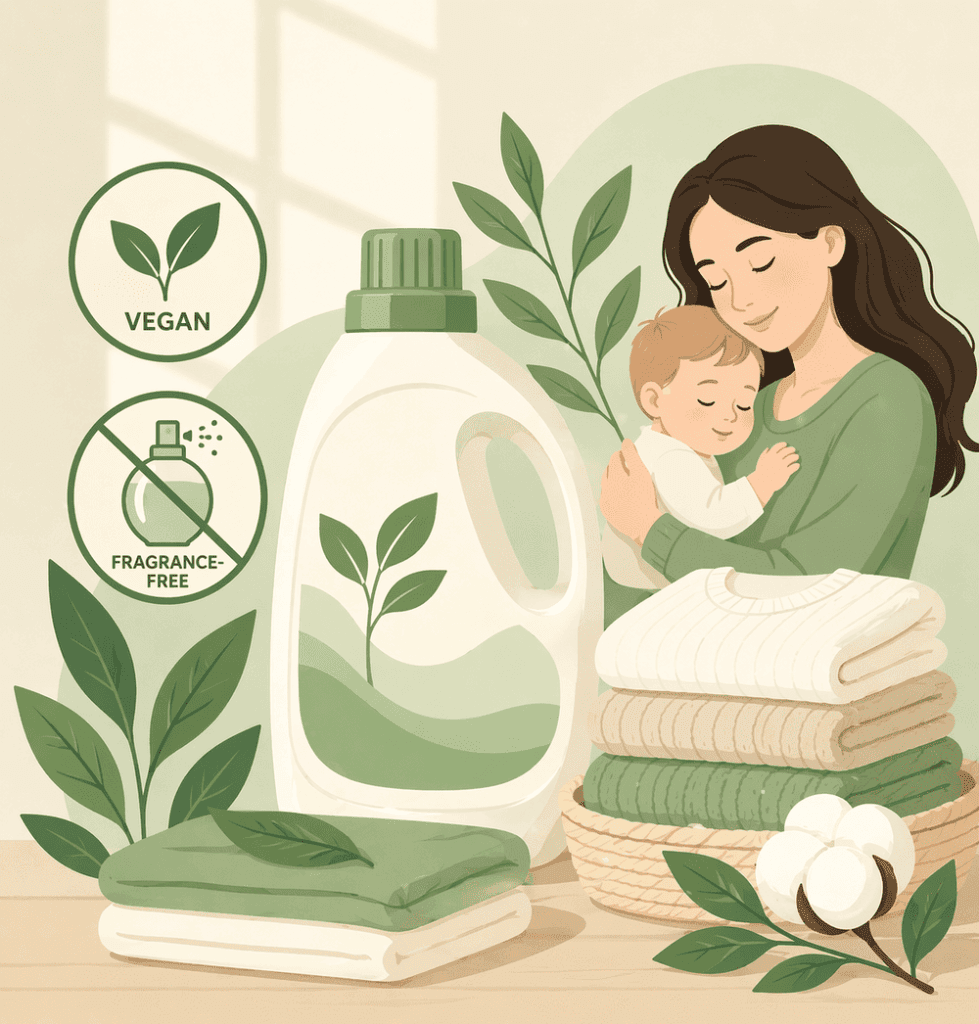
Choose a fragrance-free + dye-free vegan detergent, dose correctly, and add an extra rinse for sensitive laundry.
For brands looking to scale vegan detergent for sensitive skin into retail-ready products, Turkey-based manufacturing offers a strong advantage in both speed and cost-efficiency. Turkey’s modern home-care production ecosystem supports private label laundry detergent, contract manufacturing, and flexible packaging—from concentrated liquids to refill formats—while maintaining consistent quality for export markets. Star Kimya is a custom cleaning product manufacturer in Turkey serving global buyers with private label hygiene products, including fragrance-free and dye-free vegan laundry detergents designed for allergy-prone and sensitive-skin households. If you want to launch your own line, Star Kimya can support formula selection, packaging options, and export-ready production so you can bring a compliant, market-ready product to shelves faster.